About Melanoma
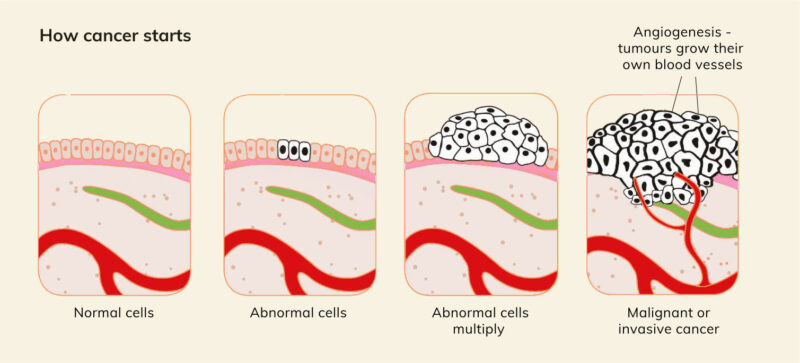
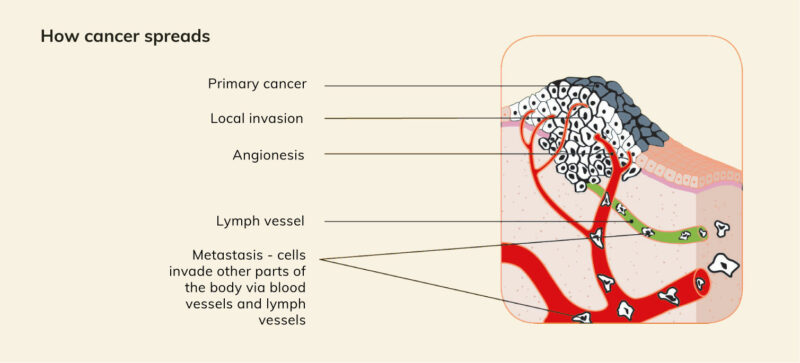
Melanoma is the most deadly form of skin cancer. It develops in the skin’s pigment cells, known as melanocytes, and can spread via the blood and lymphatic system to distant organs like the lungs, liver and brain, leading to metastatic disease. The worldwide incidence of melanoma is 325,000 patients per annum.
According to the Melanoma Institute of Australia, melanoma is the third most common cancer in Australia with approximately 17,000 Australians diagnosed with melanoma and 1,300 deaths annually. In the United States, the American Cancer Society’s estimates for melanoma in the United States for 2022 are 100,000 new melanomas and 7,500 people are expected to die of melanoma.
Market Size
The worldwide market size for melanoma treatment is US$3.5 billion. Currently, there are two main types of drug therapy used to treat advanced (stage III to stage IV) melanoma – targeted therapy and immunotherapy.
Targeting specific mutated genes based on genetic changes is an important way of treating invasive melanoma, called a targeted therapy, while activating the immune system of patients to attack the melanoma cells is another important treatment, called an immunotherapy.
Targeted Therapy
Targeted therapy is a treatment that targets the cancer’s specific genes, proteins, or the tissue environment that contributes to cancer growth and survival. This type of treatment blocks the growth and spread of cancer cells and limits damage to healthy cells.
Examples Include:
- BRAF Therapies: Dabrafenib (Tafinlar®), Encorafenib (Braftovi®), Vemurafenib (Zelboraf®)
- MEK Therapies: Trametinib (Mekinist®), Cobimetinib (Cotellic®), and Binimetinib (Mektovi®)
- Combination therapy of BRAF + MEK
Immunotherapy is the use of medicines to help a person’s own immune system recognize and destroy cancer cells more effectively. An important part of the immune system is its ability to keep itself from attacking normal cells in the body, through a process known as checkpoints. Specifically, the body harnesses certain proteins on immune cells that need to be turned on (or off) to commence an immune response.
Unfortunately, melanoma cells are able to manipulate these checkpoints to avoid the body’s immune response and hence become attacked by the immune system. More recently, a new class of drugs has been developed, called checkpoint inhibitors, which are highly effective in around 25% of melanoma patients. However, approximately 75% of patients do not respond significantly to these drugs.
Examples Include:
- Programmed Death (PD-1) Inhibitors: Pembrolizumab (Keytruda®) and Nivolumab (Opdivo®)
- Programmed Death Ligand-1 (PD-L1) inhibitors: Atezolizumab (Tecentriq®)
- CTL-4 inhibitors: Ipilimumab (Yervoy®).
Initial Diagnosis of Melanoma
The gold standard diagnosis of melanoma is a biopsy which determines whether there are melanoma cells present in a suspicious looking spot or lump on the skin. The pathology report that follows will determine the different types of melanoma out of the four most common melanoma of the skin (cutaneous melanoma). The stages of melanoma are as follows:
- Stage 0: This refers to melanoma in situ, which means melanoma cells are found only in the outer layer of skin or epidermis. Standard of care includes surgery.
- Stage I: The primary melanoma is still only in the skin and is relatively thin. Standard of care includes surgery.
- Stage II: Stage II melanoma is thicker than stage I melanoma, extending through the epidermis and further into the dermis, the dense inner layer of the skin. Standard care includes surgery and radiotherapy.
- Stage III: Stage III melanoma has spread locally or through the lymphatic system to a regional lymph node located near where the cancer started or to a skin site on the way to a lymph node. Standard care includes surgery, radiotherapy, targeted therapy and immunotherapy.
- Stage IV: This stage describes melanoma that has spread through the bloodstream to other parts of the body, such as distant locations on the skin or soft tissue, distant lymph nodes, or other organs like the lung, liver, brain, bone, or gastrointestinal tract. Standard care includes surgery, radiotherapy, targeted therapy and immunotherapy.
Signature Oncology has developed a proprietary diagnostic technology platform based on an interferon gamma (IFNG, IFN) signature profile to assist clinicians in the treatment of stage III to stage IV melanoma patients with immunotherapies. There is current no regulatory approved companion diagnostic for immunotherapy treatment in the US, Europe and Australia.
Signature oncology is focused these stages of melanoma, where immunotherapies are a recognised standard of care treatment and the company has developed a proprietary diagnostic test that further inform treatments using immunotherapy. Specifically, Signature Oncology shown strong clinical utility in the stage III neoadjuvant setting of melanoma, which is the treatment of patients with immunotherapies prior to surgical resection. The technology also has applications in the adjuvant (post-surgery) setting and in stage IV (advanced/metastatic disease) melanoma.